

Join us to explore advanced research in spatial theories and methods,
connecting experts in spatial science, geosciences, earth observation, ecology, and urban studies for innovative collaborations and knowledge exchange.
News
Geospatial Conferences 2026: Global Events in GIS, Remote Sensing & Earth Observation
Harvard Spatial Data Lab Workshop 2025, 15 January 2025, Online, Spatial Data Lab, Harvard University
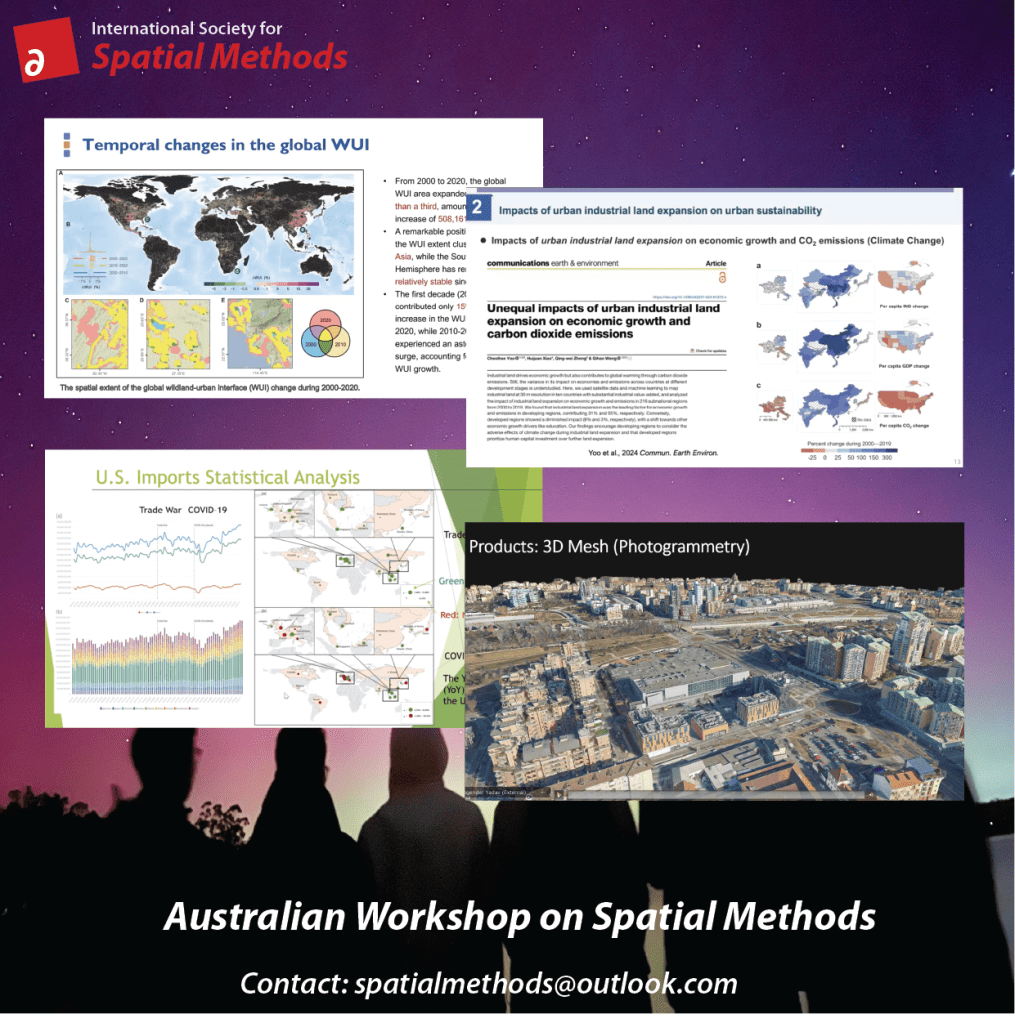
Australian Workshop on Spatial Methods, 12 April 2025, Online, International Society for Spatial Methods
The 2025 International Symposium on Spatiotemporal Data Science, 22-24 May 2025, Center for Geographic Analysis, Harvard University
2025 Summer Training Workshop on Spatiotemporal Innovation, 21-25 Jul 2025, Center for Geographic Analysis, Harvard University
If you have recent or featured publications on spatial theories and methods that you’d like to share, please feel free to contact us.
Upcoming
Workshops
Our recent workshops have featured active researchers from around the world presenting their latest work, with a special focus on early and mid-career scholars in the field of spatial theories and methods.
Join the “International Workshop on Spatial Methods” by clicking this MS Teams link
MS Teams Meeting ID: 437 588 598 769. Passcode: m8wMTa
Past
Workshops
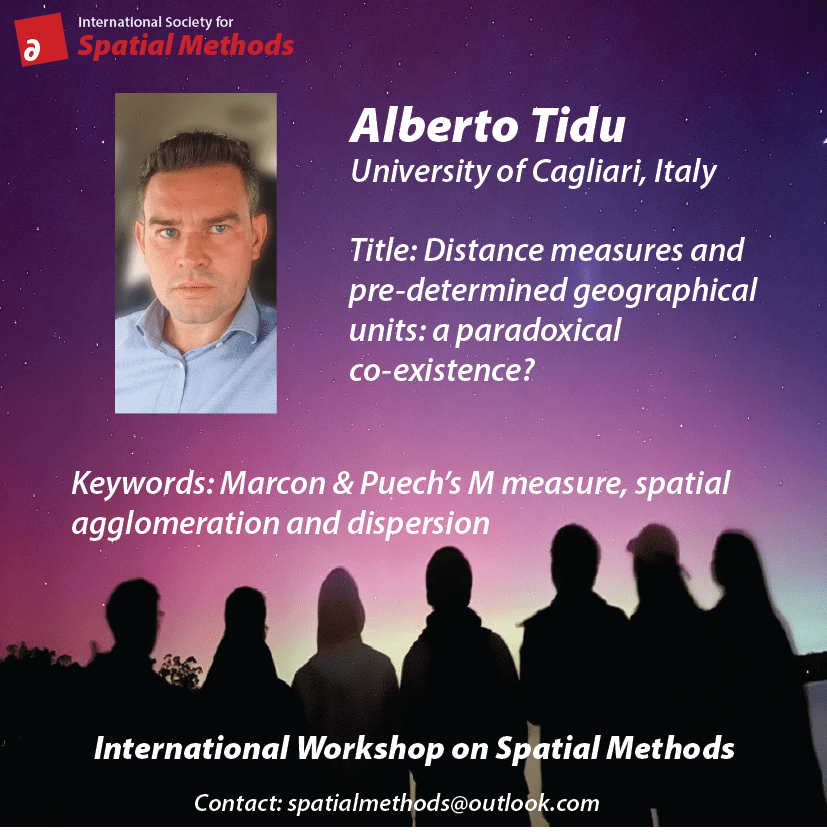
Alberto Tidu
University of Cagliari, Italy
Title: Distance measures and pre-determined geographical units: a paradoxical co-existence?
Time: 3 pm, Perth time (9 am, Italy time), 30 May 2024
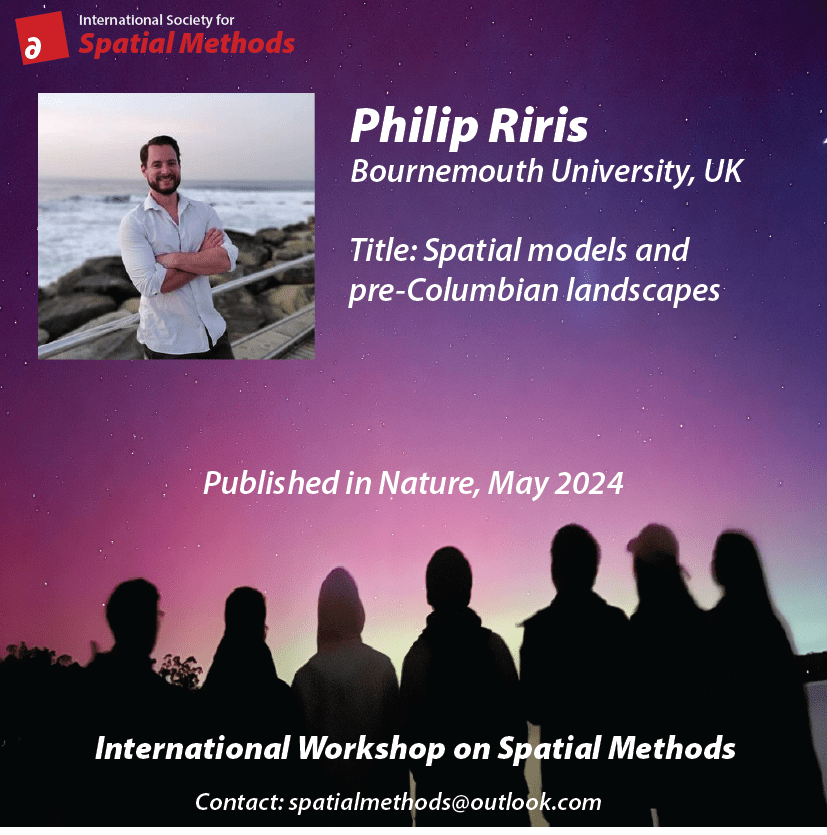
Philip Riris
Bournemouth University, UK
Title: Spatial models and pre-Columbian landscapes
Published in Nature, May 2024
Time: 4 pm, Perth time (9 am, UK time), 4 June 2024
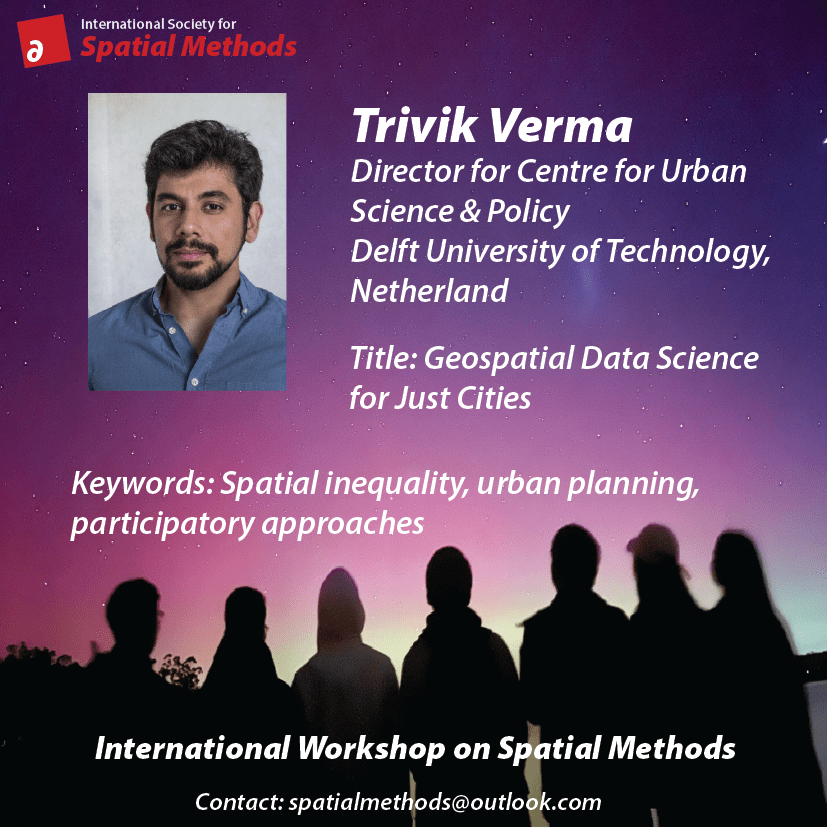
Trivik Verma
Director for Centre for Urban Science & Policy, Delft University of Technology, Netherland
Title: Geospatial Data Science for Just Cities
Time: 3 pm, Perth time (9 am, Netherland time), 7 June 2024
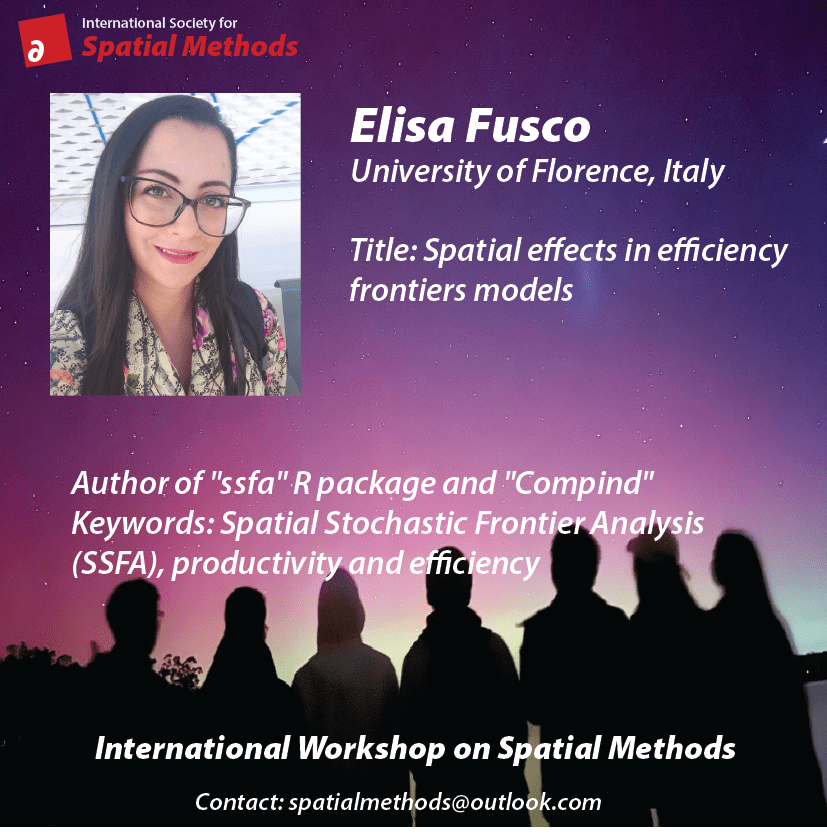
Elisa Fusco
University of Florence, Italy
Title: Spatial effects in efficiency frontiers models
Time: 3 pm, Perth time (9 am, Italy time), 12 June 2024
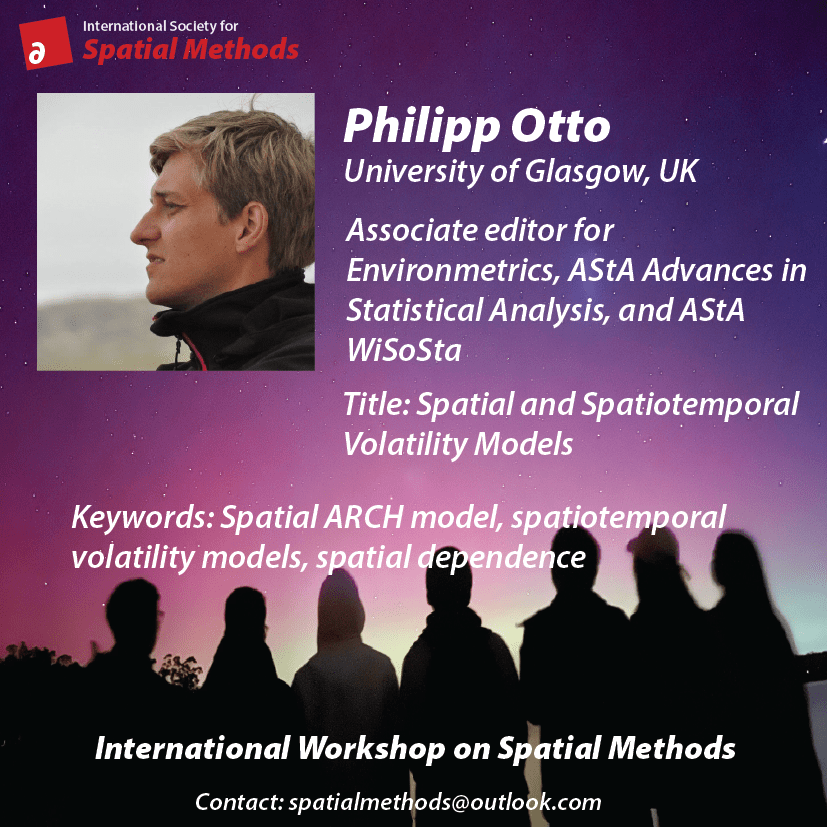
Philipp Otto
University of Glasgow, UK
Title: Spatial and Spatiotemporal
Volatility Models
Time: 4 pm, Perth time (9 am, UK time), 12 June 2024
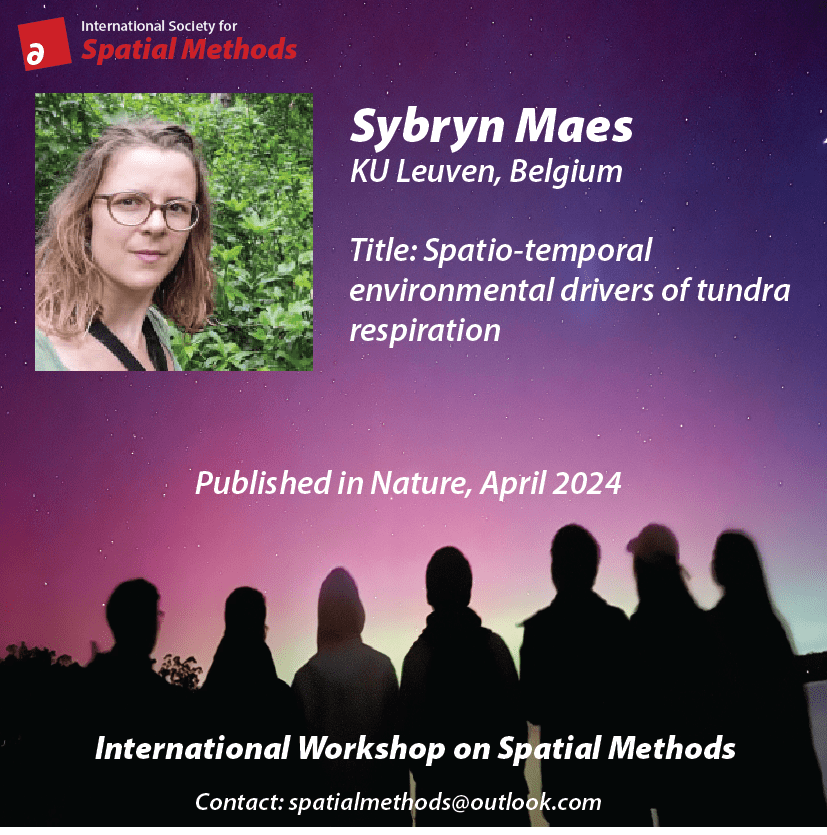
Sybryn Maes
KU Leuven, Belgium
Title: Spatio-temporal
environmental drivers of tundra respiration
Published in Nature, April 2024
Time: 3 pm, Perth time (9 am, Belgium time), 2 July 2024
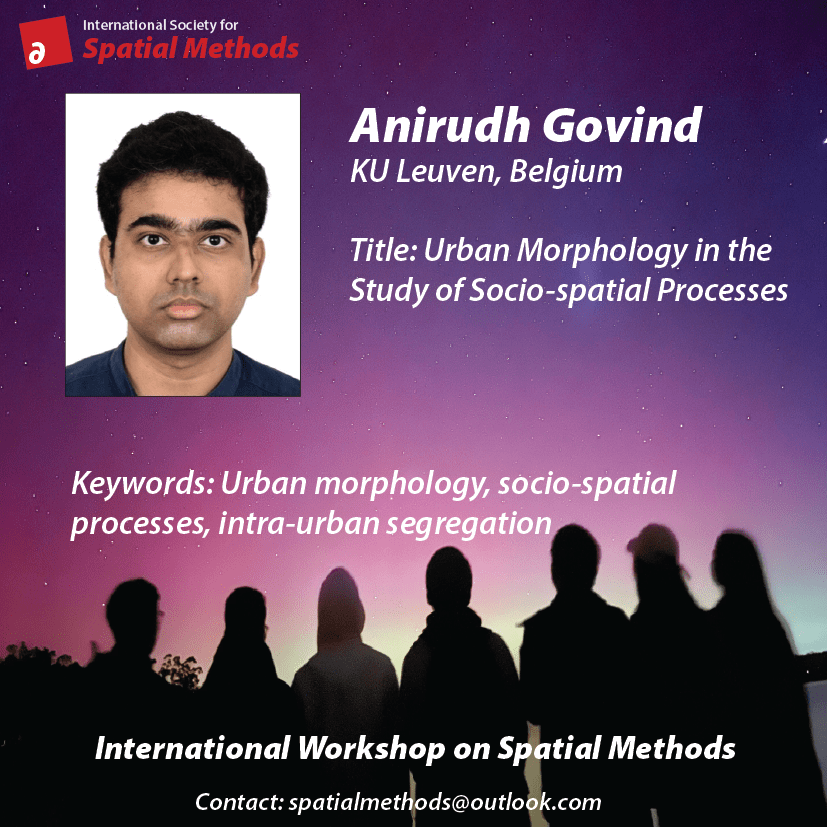
Anirudh Govind
KU Leuven, Belgium
Title: Urban Morphology in the Study of Socio-spatial Processes
Time: 4 pm, Perth time (10 am, Belgium time), 8 August 2024
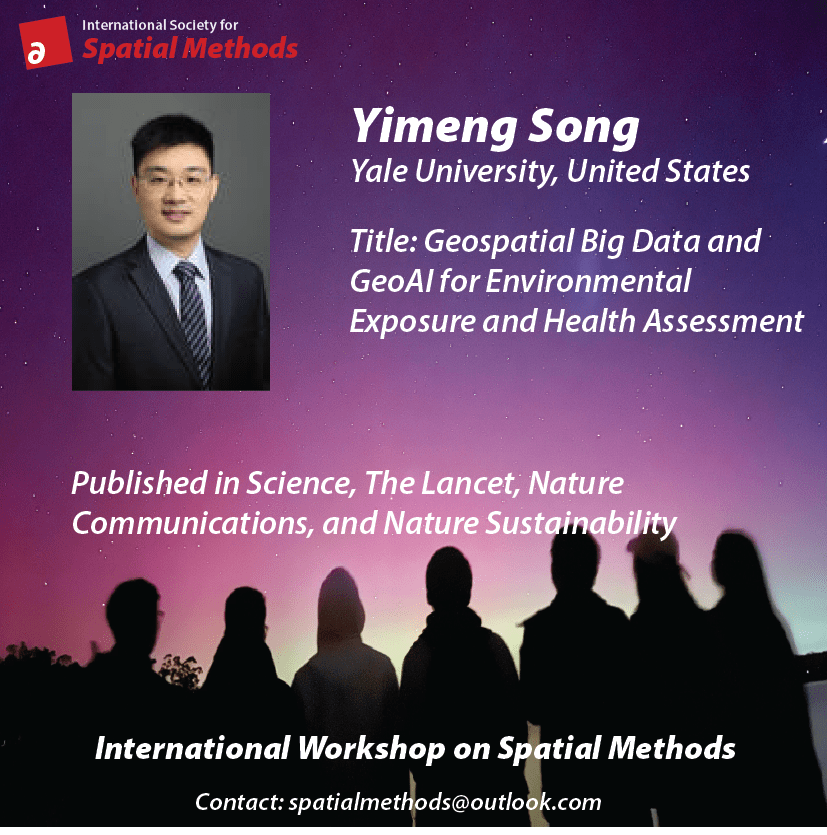
Yimeng Song
Yale University, United States
Title: Geospatial Big Data and GeoAl for Environmental
Exposure and Health Assessment
Time: 8:30 pm, Perth time (8:30 am, US East time), 15 August 2024
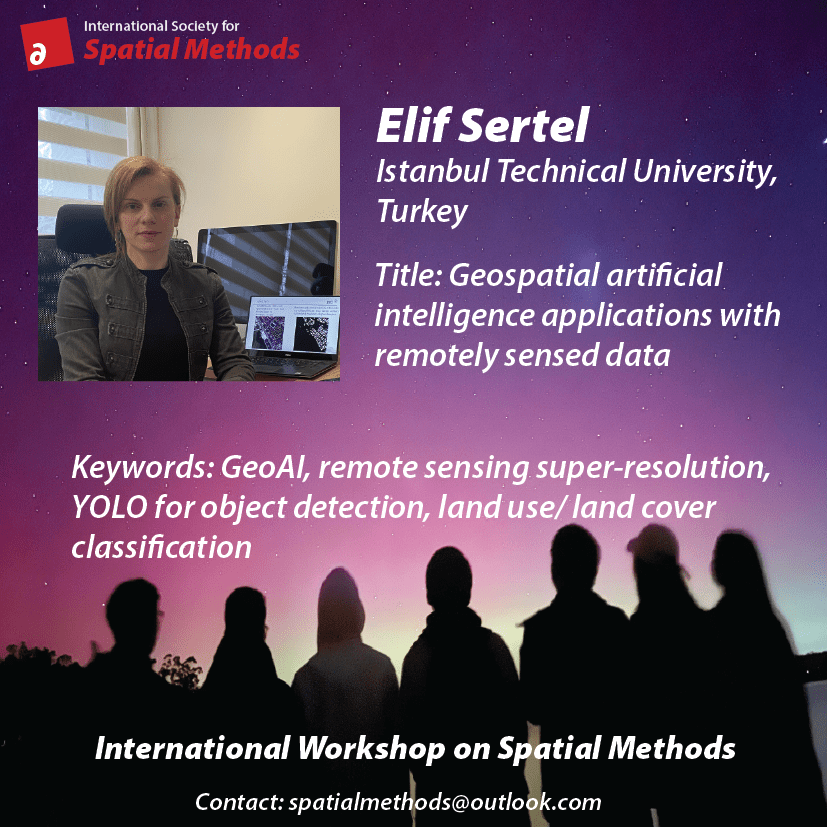
Elif Sertel
Istanbul Technical University, Turkey
Title: Geospatial artificial intelligence applications with remotely sensed data
Time: 3:00 pm, Perth time (10:00 am, Istanbul Turkey Time), 12 September 2024
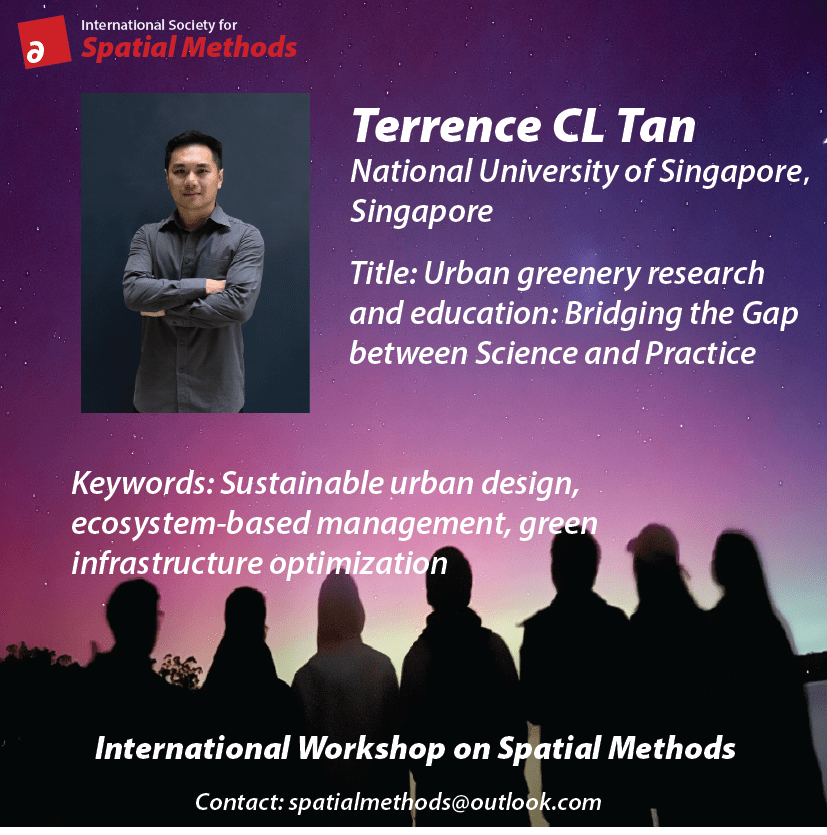
Terrence CL Tan
National University of Singapore, Singapore
Title: Urban greenery research and education: Bridging the Gap between Science and Practice
Time: 10 am, Perth / Singapore time, 19 September 2024
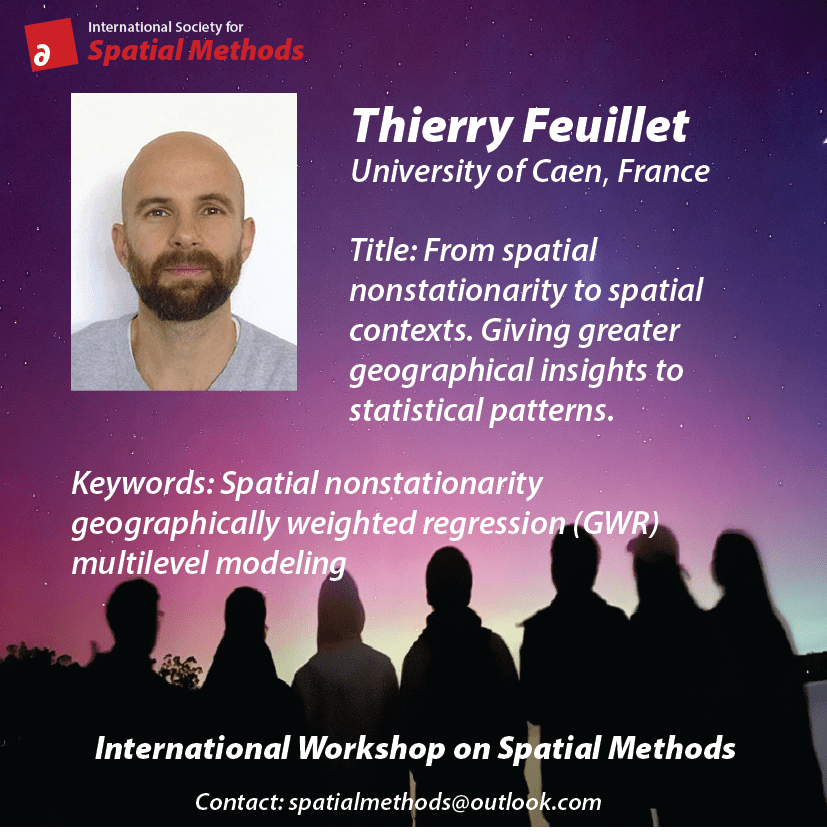
Thierry Feuillet
University of Caen, France
Title: From spatial nonstationarity to spatial contexts. Giving greater geographical insights to statistical patterns.
Time: 3:30 pm, Perth time (9:30 am, France time), 24 September 2024

Andrew Zammit Mangion
University of Wollongong, Australia
Title: New directions in spatial statistics
Time: 10 am, Perth time (1 pm, Sydney time), 14 October 2024
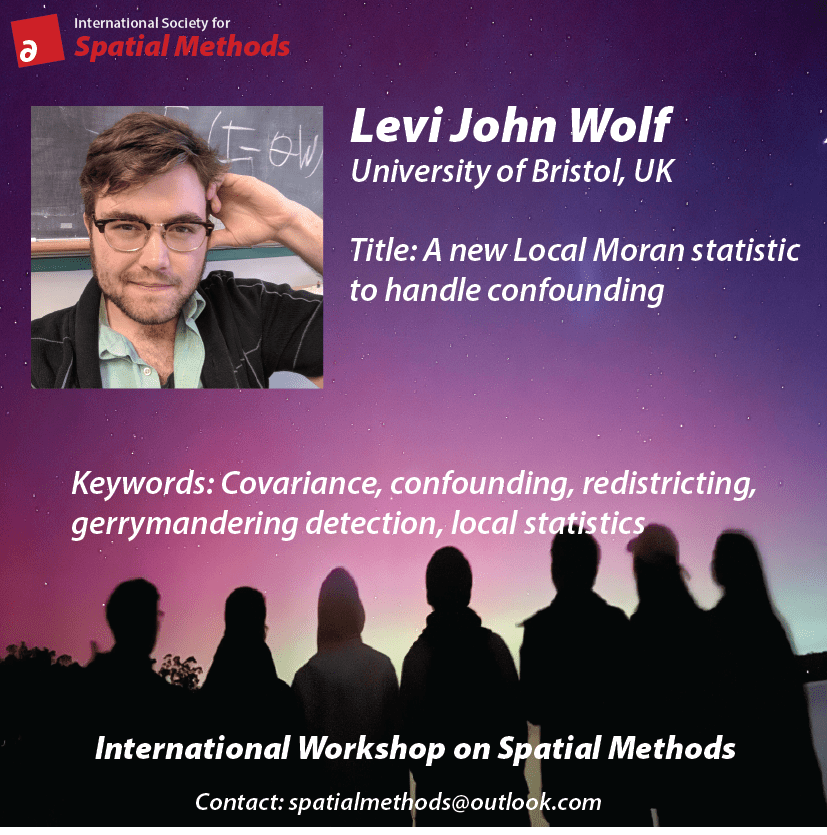
Levi John Wolf
University of Bristol, UK
Title: A new Local Moran statistic to handle confounding
Time: 6:00 pm, Perth time (10:00 am, UK Time), 21 October 2024
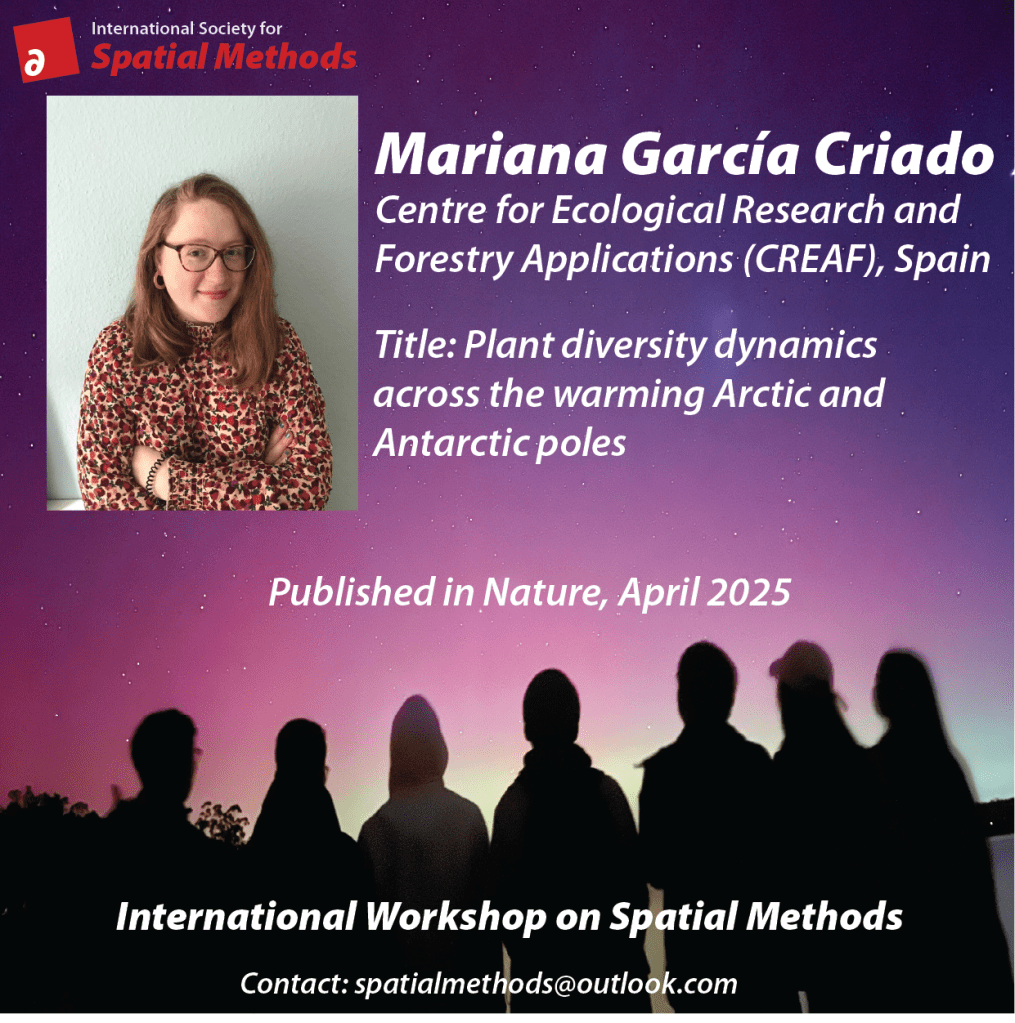
Mariana García Criado
Centre for Ecological Research and Forestry Applications (CREAF), Spain
Title: Plant diversity dynamics across the warming Arctic and Antarctic poles
Published in Nature, April 2025
Time: 2:30 pm, Perth time (8:30 am, Spain time), 10 June 2025
What People Say
“I am pretty sure that it could be very fruitful to discuss with you and your colleagues about theory and methods in quantitative geography.”
— Thierry Feuillet, Professor in Geography, University of Caen Normandy, France
latest
call for working groups
The working groups are dedicated to advancing specific concepts, algorithms, models, or methods within the field.
Each working group is led by co-chairs comprising leading scientists and expert members, who collaborate to define the group’s objectives, methodologies, and long-term or short-term plans to foster innovation and knowledge exchange.
We invite you to
share your featured research
on spatial theories and methods to broader fields and researchers.